
 See Our Latest Article on HelloNation

Can chiropractic care help with migraines?
For some people, chiropractic care may be a useful complementary approach, particularly when migraine attacks occur alongside neck stiffness, upper-back tension, or restricted movement. However, current evidence does not establish spinal manipulation as a reliable stand-alone treatment for migraine.
Research on manipulation for migraine has produced mixed results. Some studies suggest possible reductions in migraine frequency or intensity, while more recent reviews describe the evidence as limited or very low certainty. This means some individuals may notice improvement, but a response should not be assumed or guaranteed.
For residents of Middletown, NY, the practical question is usually not whether chiropractic care “cures” migraine. A better question is whether carefully selected, conservative care can address musculoskeletal factors that may be adding to the problem.
What makes a migraine different from an ordinary headache?
Migraine is a neurological condition, not simply a headache caused by tight muscles. An attack may include:
- Moderate to severe throbbing or pulsating pain
- Pain that is worse with routine activity
- Nausea or vomiting
- Sensitivity to light, sound, smells, or movement
- Visual changes or other warning symptoms known as aura
Neck pain can occur during a migraine and may sometimes begin before the head pain. That does not necessarily mean the neck is the original cause. Treating neck tension may help reduce one contributing factor without treating the underlying migraine disorder itself.
Tension-type headaches and cervicogenic headaches are different conditions. A cervicogenic headache begins in structures of the neck and may cause pain that travels toward the back of the head, temple, or eye. Because symptoms can overlap, a careful history is more useful than assuming every recurring headache is a migraine.
What might chiropractic care involve?
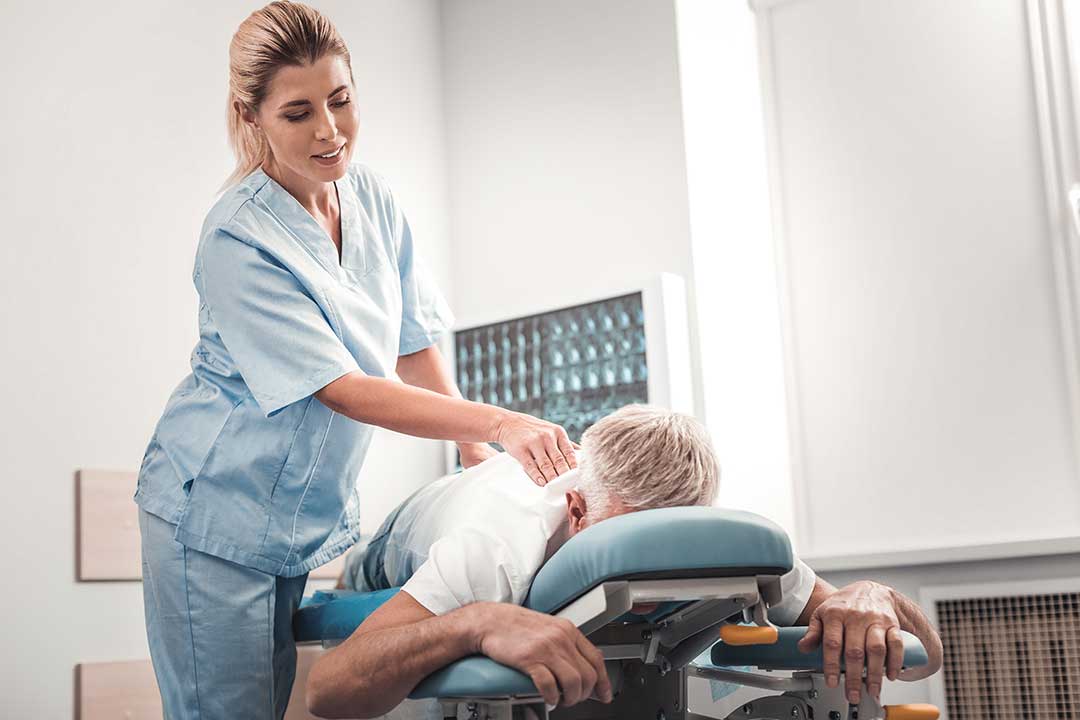
A responsible approach begins with an assessment rather than an automatic adjustment. The evaluation may include questions about headache frequency, duration, triggers, sleep, medications, injuries, vision symptoms, jaw tension, posture, and neck movement.
Care may include:
- Gentle joint mobilization
- Soft-tissue techniques
- Exercises for the neck, shoulders, and upper back
- Postural and movement guidance
- Advice about activity habits and ergonomic positioning
- A referral or coordinated care plan when symptoms suggest another medical cause
High-velocity neck manipulation is not the only form of chiropractic care. People who are concerned about forceful techniques can ask whether gentler methods, exercise-based care, or treatment directed away from the neck are reasonable options.
The 2023 VA/DoD headache guideline suggests physical therapy as a possible treatment for migraine, tension-type headache, and cervicogenic headache. That recommendation supports movement-based rehabilitation more clearly than it supports a claim that neck manipulation alone prevents migraine.
How strong is the evidence?
The evidence is best described as inconclusive.
Some earlier trials reported fewer migraine days after spinal manipulation. Other research found that manipulation did not clearly outperform comparison treatments or sham procedures. Differences in study design, treatment methods, patient selection, and outcome measurement make the findings difficult to combine.
For that reason, chiropractic care should be viewed as an optional adjunct, not a replacement for migraine diagnosis, medication when needed, or medical evaluation. A person who has frequent attacks may need a broader plan that includes acute treatment, preventive treatment, sleep and activity review, and identification of personal triggers.
A headache diary can help determine whether any treatment is genuinely helping. Record:
- The date and duration of each attack
- Pain intensity and associated symptoms
- Sleep quality
- Meals, hydration, caffeine, and alcohol
- Menstrual or hormonal patterns when relevant
- Weather or barometric changes
- Screen time, work posture, and physical exertion
- Medications or other treatments used
Seasonal changes may affect routines for local households. Cold weather can lead to more time indoors, reduced activity, dry heated air, altered sleep schedules, or increased neck and shoulder tension from layered clothing and sedentary habits. These factors may influence symptoms, but they should not be treated as proof that a particular weather pattern is the cause of migraine.
Is neck adjustment safe for people with migraine?
Most reported side effects of spinal manipulation are temporary, such as soreness, stiffness, fatigue, or a temporary increase in headache. Serious complications are rare, but serious neurological problems, including stroke involving arteries in the neck, have been reported. Research has not established how often these events are caused by manipulation, but the potential risk deserves a direct discussion.
Extra caution is appropriate for people with:
- A history of stroke or blood-vessel disease
- Recent neck injury or significant trauma
- Unexplained dizziness, fainting, or neurological symptoms
- Bleeding disorders or medicines that affect clotting
- Connective-tissue disorders
- Severe or unusual neck pain
- A new headache pattern
A person should disclose relevant medical conditions and medications before treatment. Forceful neck techniques should not be used to delay evaluation of a potentially serious headache.
When should a headache be evaluated urgently?
Seek urgent medical care for a headache that:
- Reaches maximum intensity suddenly
- Follows a significant injury
- Occurs with weakness, numbness, confusion, trouble speaking, fainting, or difficulty walking
- Is accompanied by fever, stiff neck, or a new rash
- Causes new vision loss or persistent double vision
- Is new during pregnancy or shortly after delivery
- Is substantially different from previous headaches
- Becomes progressively more frequent or severe
- Occurs with new symptoms after age 50
A new or changing headache pattern deserves medical assessment before complementary treatment is considered. Emergency symptoms should not be attributed to neck tension, posture, dehydration, or weather.
What is a sensible way to consider chiropractic care?
A reasonable approach is to use chiropractic care as one part of a monitored plan. The goal should be specific and measurable, such as fewer headache days, improved neck movement, less muscle tension, or better ability to complete normal activities.
Treatment should be reconsidered if headaches become more frequent, symptoms worsen after each session, or there is no meaningful improvement after a defined trial. A migraine diary can make this decision more objective than relying on memory.
For many people, the most useful non-drug strategies are not limited to spinal manipulation. Regular sleep, consistent meals, hydration, gradual aerobic activity, stress-management skills, and exercises for neck and upper-back endurance may all have a role. These strategies are not substitutes for medical care, but they can fit alongside it.
The clearest answer is that chiropractic care may help some people with migraine-related neck discomfort or overlapping musculoskeletal headaches, but it is not a proven cure for migraine. Conservative, individualized care may be considered when serious causes have been ruled out and when it complements—not replaces—appropriate headache treatment.
